Friday, 12 December 2014

Where does Africa stand in the ‘global climate treaty’?


Africa 1

As the climate negotiations in Lima approach their peak, there have been worries about the whole process and whether all voices have been heard in the negotiations. I must admit that it is always hard to have solutions for all ‘problems’ but there is a twist to this in respect to the ongoing negotiations.
The African group has been seeing the glass as half empty!

The Pan African Climate Justice Alliance (PACJA) recently held a demonstration to remind political leaders that Africa is watching and that there needs to be an all-inclusive package. An agreement that would in reality be binding rather than one sided. PACJA, through a press conference, registered their displeasure at the turn of events.


Panelists during a press conference organized by the Pan-African Climate Justice Alliance

What is the issue

The major issue of concern is that African Group’s position on the scope of Nationally Intended Determined Contributions (INDCs) has not been taken seriously throughout the negotiations. While the Africa Group and other Least Developed countries have been pushing for adaptation and mitigation to be included in the text, the EU and other developed countries have been keen to only have mitigation and not adaptation. The fear is that if adaptation is included in the agreement, then the developed countries will be obliged to pay for adaptation.
“We have a mandate from science, from our people, from the continent of Africa, and from the United Nations itself to push for enhanced global climate action to cut [greenhouse gas] GHG emissions as well as strengthen adaptation; this remains a priority for us,”  Nagmeldin El Hassan, Chair of the African Group
There have been outcries from the part of the African Group that the parties, especially the developed countries, do not agree to include all elements in the agreement-adaptation, mitigation, finance, adaptation, technology transfer and capacity building. Africa has been pushing for adaptation to be part of the post-2015 agreement but a number of  developed countries do not seem to agree on anything that relates to adaptation.

With developed countries continuing to make pledges to the Green Climate Fund and others announcing their commitments to reduce green house gas emissions, hopes are building for the formulation and implementation of the global climate treaty. However, these pledges and commitments need to be in line with the below 2 degrees celcius goal and linked to tbe mitigation targets.

In respect to Africa’s concerns, it is hoped that adaptation will be given as much wait as mitigation in the  new agreement.
“The agreement should not only be about reducing emissions. It is supposed to address Africa’s main concern, which is adapting to the warming we did not cause, but is destroying our continent. It is about ensuring the finance, technology and capacity building that Africa and other developing contries need to adapt to and mitigate climate change” Samson Ogallah, PACJA Programme officer
The adaptation scenario

If you have ever been to various regions in Africa where communities continue to suffer from adverse impacts of climate change then you will appreciate the fact that adaptation is very critical at this stage.

These vulnerable communities have for the longest time tried to leave in harmony with the environment. To them, the  word ‘sustainable development’ has no meaning. They do not know what industrialization is.

Most often, they rely on natural/renewable sources of energy like natural light as opposed to electricity. They cook using dead wood/forest products and not gas/electricity. Women walk for long distances to fetch water from the streams that are already drying up-they don’t understand the luxury of having tapped water in every corner of the house. More often, animals/carts and bicycles are used for transportation, not fuel guzzlers. Organic food products with less or no spices have always been served as opposed to over-processed food products.

They only need water, soap and sun to wash and dry their clothes-they don’t know what a ‘washing machine’ is. They don’t store food for later,they cook what is enough hence a refirgrator is unheard of. To receive news and feel ‘connected’ to the rest of the world, an a typical African villager only needs a tiny radio by his/her side. Better still, a rumor-monger for a friend and family would really be resourceful.

A typical African villager continuous to dig the dry and barren soils each year to plant crops, even in the face of the long dry spells. Why? Because agriculture has always been their ‘brain child’. Despite the harsh weather and the more often changing climatic conditions, African farmers continue to strive. Some families go without food for days but they still hope to reclaim their livelihoods that would allow them be food secure. Livestock continue to die due to lack of pasture and water as pastralists try their hands on other sources of livelihoods (not an easy thing for them to do). Disease outbreaks, like malaria, have also become the norm. Families continue to be displaced due to frequent floods-the once farmers have no choice but to rely on food relief from ‘donor’ countries. The list is long.

A village in Senegal
A remote village in Senegal

A typical vulnerable African does less harm to the environment but still inherits the impacts caused by other global actors to the the environment. His or her livelihood has changed. They need to be normal again.

The cities in Africa are in dire need for adaptation too. The infrastructural situations always ‘shout out’ for help! Extreme whether events have greatly destroyed properties-building have been swept away by floods and landslides. Roads are a mess! Communication and energy facilities are always in jeopardy. The list is long.

The low level of industrialization in Africa contributes to very low (or negligible) emissions to the atmosphere. With the world being a global village, Africa tends to receive a ‘generous share’ of the emissions’ impacts yet the capacity to adapt is lacking.

My ‘two cents’

Africa with its massive yet very vulnerable population should not be forgotten in the ‘climate treaty’ equation. The game needs to be fair and just. Developed countries should always strive to use their power (both in terms of terms and financial and technical capabilities) in strengthening negotiations and not weakening them. To try to be self-centered and push burdens, that are uncalled for, to less developed/ developing countries loses the meaning of the ‘global’ ‘binding’ ‘agreement’.

If the principle of ‘Common but Differentiated Responsibilities’ is a strange statement in the negotiations then the outcome from Lima will not really be ‘a global binding treaty’ but rather a mean and self-centered piece of paper? We still wait…

Monday, 8 December 2014

Women pushing it so hard in Lima!


Ms. Gertrude Kenyangi of ‘Support for Women in Agriculture and Environment’

Diane Mariechild, the author of ‘Mother Wit and Inner Dance’ once said that “A woman is the full circle. Within her is the power to create, nurture and transform.” Indeed this is what women are exactly doing in Lima during the COP20. The first week of the COP20 saw a proposal on Gender and Climate change Work Programme go through the negotiations. Based on this proposal, a COP decision would be made to establish a two-year work programme for promoting gender balance and achieving gender-responsive climate policy, which is one of the priorities for the COP20 President as outlined in his opening statement.

Women have been in the forefront pushing their voices through the often powerful forces at the negotiations. The members of the Women Gender Constituency (WGC) have been calling for “an effective, equitable and just new climate agreement that respects the human rights and gender equality, including the rights of future generations”.
During the opening sessions, Mrinalini Rai, on behalf of the WGC reminded parties that including gender equality in the text was crucial, recognizing the role that women play in contributing to climate action and adaptation. She also reinstated the idea that recognizing gender equality in areas such as capacity building and finance is very important.
“This is the right moment to set the bar high and ensure that future climate policies take into account the rights, needs, perspectives, capacities and expertise of women and men alike, in order to achieve truly sustainable development and avert the climate crisis” –Mrinalini Rai
Ms. Gertrude Kenyangi from ‘Support for Women in Agriculture and Environment’ in Uganda, further added the importance of implementation that would support women living in and around communities and ecosystems most impacted by climate induced losses.

The battle

The first week of the negotiations saw a heated debate over two words,  ‘Gender equality‘. Saudi Arabia challenged ‘gender equality’ throughout the week.
But what would you expect from Saudi Arabia when it comes to such a topic? A background check on Saudi Arabia’s gender inequality reveals that it is one of the top 10 ranked countries in the world that nurtures a culture of gender inequality according to the Gender inequality index of 2012. For instance, Saudi Arabia is the only country in the world that prohibits women from driving!

“Girls and women are forbidden from traveling, conducting official business, or undergoing certain medical procedures without permission from their male guardians

Further, the Law seals this nonsense (?) by not guarantying gender equality and considering girls and women to be legal minors!

Women and men on different queues in Saudi Arabia

In terms of emissions, the Climate Change Performance Index released on 8 December by Germanwatch has ranked Saudi Arabia as one of the worst countries in terms of taking ambitious actions on climate protection and having best-practice climate policies in place. Saudi Arabia should therefore focus more on reducing emissions and less on trying to define texts. Undermining women in climate change matters will never lift Saudi Arabia high up on the rank of the performance index.

Gender and Climate change

When it comes to climate change, the women’s level of vulnerability need not be doubted! The analysis of gender roles in society clearly points to a situation where women carry the heaviest burden in terms of work load-they are the last to go to bed and the first to wake up in the morning. They go beyond their own strengths to manage resources while often single-handedly working to take care of their families. For instance, the largest percentage of women in rural homes in Africa is involved in agriculture.

Women have also been seen to be the most vulnerable to climate change impacts during extreme climate events. My own research across four counties in Kenya, shows that women continue to suffer in the face of climate change. In Turkana, the Northern region of Kenya, women who have been pastoralists for a long time, are now struggling to diversify their livelihoods and build resilience in the face of prolonged droughts.

Each day they walk for miles looking for water. They queue for the longest time waiting to receive donations and food relief in order to feed their families. One woman admitted to often going without food for days so that she can be able to feed her family on the little food available.
The other side of the picture reveals that as these women go through all the struggles, their men expect to find food when they get home. However, it is of importance to note that not all men in rural areas do not work as much as women do but a hig. This is everyday scenario in many rural homes in Africa.

Asha Sitati talking to a group of women in the Northern region of Kenya

If you ask me, women and men do not ‘stand on the same ground’ when it comes to matters of climate change. Their voices have always been unheard in the process.
In Doha, countries adopted a decision on promoting gender balance and improving the participation of women in UNFCCC. The WGC has been trying to ensure that gender equality and human rights are recognized in all climate agreements in order to achieve climate solutions that would involve mitigation and adaptation, as well as addressing loss and damage.
but we know that at the UN, everything is a fairy tale until it is implemented.

We are still waiting on a two-year work programme to promote greater gender balance and develop gender-responsive climate policy. it is hoped that the ‘long wait’ will ensure gender equality is integrated in the climate change process. Such a policy would motivate women and catalyze actions towards the fight against climate change. After all, aren’t we all children of ‘mother-earth’?

If Lima can’t make it happen, then there is no way that women in Saudi Arabia will fully unleash their potential and work towards a reducing climate change. The rural woman in Turkana, Kenya will never be free from the struggles brought forth by the prolonged droughts.

Saturday, 6 December 2014

Indigenous activists mourn their dead


Soweto
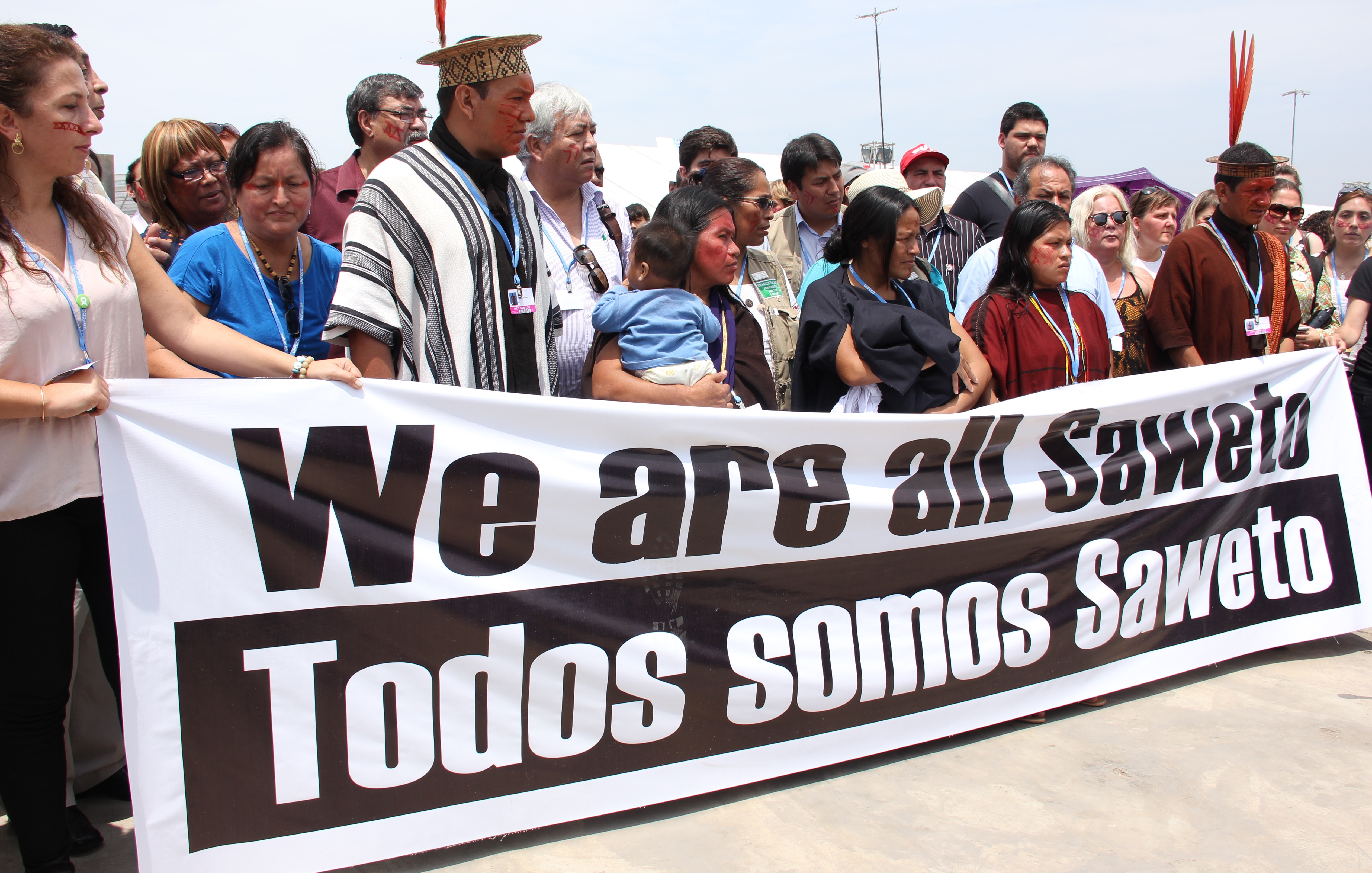
Protesters in solidarity with the widows of the late Saweto activists

Indigenous activists are being slaughtered in Peru.

On Friday,  4 of the widows of Indigenous activists killed in Peru this year came to COP20. They were joined by members non-governmental organisations who stood in solidarity behind a banner reading, ‘WE ARE ALL SAWETO’.

In September 2014, 4 indigenous activists seeking to protect their homes from illegal logging were killed in Saweto, an indigenous community of Ashaninka that has an untitled territory of around 300 square miles (80,000 hectors). For years, they have been trying desperately to protect and preserve the area from illegal loggers in an area with minimal government presence.

The irony

According to the NGO Global Witness, Peru is the fourth most dangerous country for environmental defenders, and 57 environmental activists have been killed since 2002, predominantly by illegal loggers. This is a critical issue for the country. According to World Bank, 80% of Peruvian timber exports in 2012 were illegally acquired. But of importance to note is that Peru and Norway signed a $300 Million at the UN Climate Change summit in September to reduce net deforestation to zero by 2021!

The Kenyan story

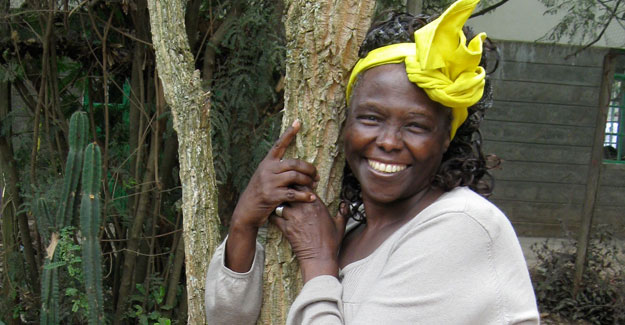
The whole protest made me reflect on my home in Kenya. Only a couple of years ago,  forests were being degraded at an alarming rate. This is when the late Nobel laurette, Wangari Maathai, had to fight back to ensure the beauty of the nation. . Wangari Maathai was an environmental activist who lived most of her life championing for and protecting Kenyan forests against illegal logging.

The late Prof. Wangari Maathai

She was the first female African Nobel Peace Prize Laureate and catalyzed efforts to promote environmental justice. Her environmental activism exposed her to harsh treatments in the hands of the police and at some point, she was roughed up and part of her hair pulled off. Nonetheless, she soldiered on and fought for restoration of Mau forest, one of the biggest water towers in East and Central Africa. Based on her legacy, Kenya’s new Constitution commits to achieving “10 per cent tree cover, as well as protecting and enhancing intellectual property in, and indigenous knowledge of, biodiversity and the genetic resources of the communities”.

The COP20 and REDD+

In Warsaw, parties delivered a set of decisions that would lead to a significant impact in reducing emissions from deforestation and forest degradation in developing countries. The Warsaw Framework for REDD+ was developed. Early in the COP20 negotiations, Panama called on parties to anchor this framework into the 2015 agreement. Parties committed to supporting actions on forests and land sector especially in the preparation of intended nationally determined contributions (INDCs). Bolivia put forward a proposal on joint mitigation and adaptation approach for sustainable management of forests to look at the mechanism and modalities of REDD+. The US on the other hand felt that REDD+ includes a wide variety of approaches that range from degradation, enhancement, sustainable forest management, etc. and that there is a lot of flexibility to recognize national circumstances hence no need for additional mechanisms. However, the US was of the opinion that there is need to recognize the importance of supporting all activities, phases and strategies.

According to Brazil, there are differences between REDD+ and alternative policy approaches and therefore emphasis needed to be placed on alternative policy approaches. Most of the parties agreed that it was not conducive to agree on national guidance since national circumstances and policies will affect these decisions. However, the EU felt that there was no need to spend time discussing national approaches but rather should move towards implementation of REDD+.

REDD+ is one of the leading options for mitigating climate change. Parties’ commitment to supporting actions on forests and the land sector can greatly steer the wheel towards emissions reductions. According to Josefina Brana-Varela, Director of Policy for WWF’s international Forest and Climate Programme, “Lima is an opportunity for Parties to demonstrate political will in the lead up to next year’s goal to agree on a substantial global climate agreement. Forests can play an invaluable role in fighting climate change, but not without a REDD+ mechanism in place that promotes their conservation and sustainable management while providing valuable benefits to the people that depend on them.”

With proper mechanisms in place agreed upon at the COP20, REDD+ programme can go a long way in preventing situations like the ‘Saweto Masacre’ and the late Wangari Maathai woes from recurring in other parts of the continent. According to a UN report, “REDD+ can be a mechanism for achieving sustainable development outcomes that benefit tropical forests and their populations while simultaneously delivering climate change mitigation benefits. For indigenous peoples and other forest-dependent communities concerned with securing rights and enhancing sustainable livelihoods, REDD+ may offer both a promising new policy environment and access to resources that enable those rights and livelihoods to be realized.”

Well, hopefully the COP20 will be the last of the last of the COPs to experience such a protest. The agreed solution will be a stepping stone towards the achievement of this dream.

The Durban agreement through the eyes of an African


ADP

This week, negotiations on the global agreement have centred on the idea of historical responsibility. Debates have raged around a repeated call to ensure that countries with the greatest historical emissions, have the greatest moral cost to pay. However, of course not everyone agrees. Especially not developed countries who have the greatest climactic debt.

The G-77/China and the African group, for instance, have been very vocal on the need to centre the negotiations on this idea of historical equity. Kenya on behalf of African Group felt that there is no clear reference of the draft text to equity, CBDR, leadership by developed countries and development priorities. The feeling is that the text is vague in terms of highlighting the need to strengthen the capacity of developing countries since according to the convention, developed countries need to take the lead. They feel like emphasis on means of implementation (MoI) should be added in the text as a precondition for action cannot be wished away.

Another issue of discussion to note is that a number of groups would like to see a clear distinction between adaptation and loss and damage. According to Saudi Arabia (on behalf of least developed countries)
“Loss and damage is going beyond adaptation. It is something between adaptation and mitigation and therefore the two should be separated”.
Parties from the developing countries are also pushing for finance and capacity building for adaptation. However, capacity building did not manage to get through and had to be pushed to June, 2015!

From an African citizen’s eye…

The emphasis of negotiations should be anchored on the UN convention, which clearly states the need for climate action based on historical emissions. There is a huge difference between developed and developing countries in terms of levels of all the  greenhouse gasses they have pumped out, and the gap is just as wide when i comes to their capacity to tackle global climate issues. Most developing countries continue to grapple with the impacts of climate change due to a history that has seen developed countries pump a lot of emissions into the atmosphere. Given the binding nature of the convention, parties are obliged to stick to its provisions.

Africa’s level of vulnerability to climate change is so evident. Despite this, most African countries have already put in measures to enhance resilience and adapt to climate change through the national adaptation plans (NAPs) and working on climate change policies that would address these issues. Kenya, for instance, is one of the very few countries that have an elaborate climate change strategy in place and it is in the final stages of drafting a climate change bill. These are examples of national level efforts and commitments geared towards ‘solving’ the climate change conundrum.

Barren land in Africa

The biggest issue here in Africa is turning concepts into reality. To do that, we need more money on the table, support through improved technologies to help adapt and eventually mitigate climate change, and we need to massively increase the levels of awareness. Developing countries are already dealing with other challenges, many of which are linked to climate change challenges such as food insecurity and drought. However, with just support, developing countries can indeed push their limits and positively work towards building the resilience of vulnerable communities in adapting to climate change.

As the negotiations in Lima steer towards achieving a global agreement, the wish of an African like me is that the process will yield results that are all-inclusive, and take on board the aspirations of the developing countries.

Tuesday, 2 December 2014

Can the COP20 in Lima shine the light on Africa’s energy crisis?


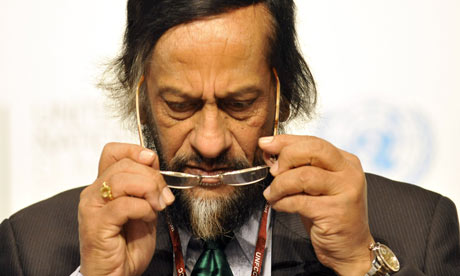
Dr. Rajendra Pacauri

The COP 20 negotiations kicked off with an all fired up plenary consisting of UNFCCC’s boss, Ms. Christina Figures. “Here in Lima, to aspire to great heights ourselves, we must draw several critical lines of action” was one of her powerful remarks. The most striking yet very critical part of the plenary was the presentation of the results outlined in the latest IPCC AR5 report. Dr. Rajendra Pachauri, Chairman of the Intergovernmental Panel on Climate Change (IPCC) clearly summarized the IPCC fifth assessment report (AR5) while outlining the impacts of climate change in the simplest terms possible.

That science points to human activities as the largest cause of increased greenhouse gases (GHG) emissions is not quite disputable. As GHG emissions continue to grow in the atmosphere, it is worth noting that according to the IPCC report, the largest percentage of this GHG so far (35%) have emanated from the energy sector. This is a worrying trend in the sense that there is very little investment in energy options that would reverse the trajectory. Energy is undoubtedly the important commodity whose demand continues to grow each passing day. The ever growing population and expanding economic environments immensely rely on this commodity yet in most cases, it is not clean and sustainable enough.

The Africa energy situation

Dealing with the sorry state of the energy sector in most African countries is very crucial. As a typical African citizen, I sometimes feel like I already have enough issues on my plate to deal with on an hourly basis. The remorseless nature of the economy that spans from struggling to pay for the ever escalating bills (power, rent, water, waste disposal, tax etc) to high costs of basic commodities are the hurdles that define citizens. Yet as we struggle to keep up with the economic pace, the glaring energy-related frustrations become regular phenomena. Striking a balance between such issues remains a conundrum that can only be dealt with in a critical and very innovative way of thinking.

Despite the large proportion of the population lacking access to energy, those who have access do not fully enjoy that privilege. The high cost of energy coupled with insufficient/irregular supply continues to erode smiles on the faces of the very ‘privileged’. Kenya, for instance, heavily relies on hydroelectric power, which has not been unsustainably generated. With the growing population and energy demands, it is only prudent that rapid measures be employed in curbing the energy menace.

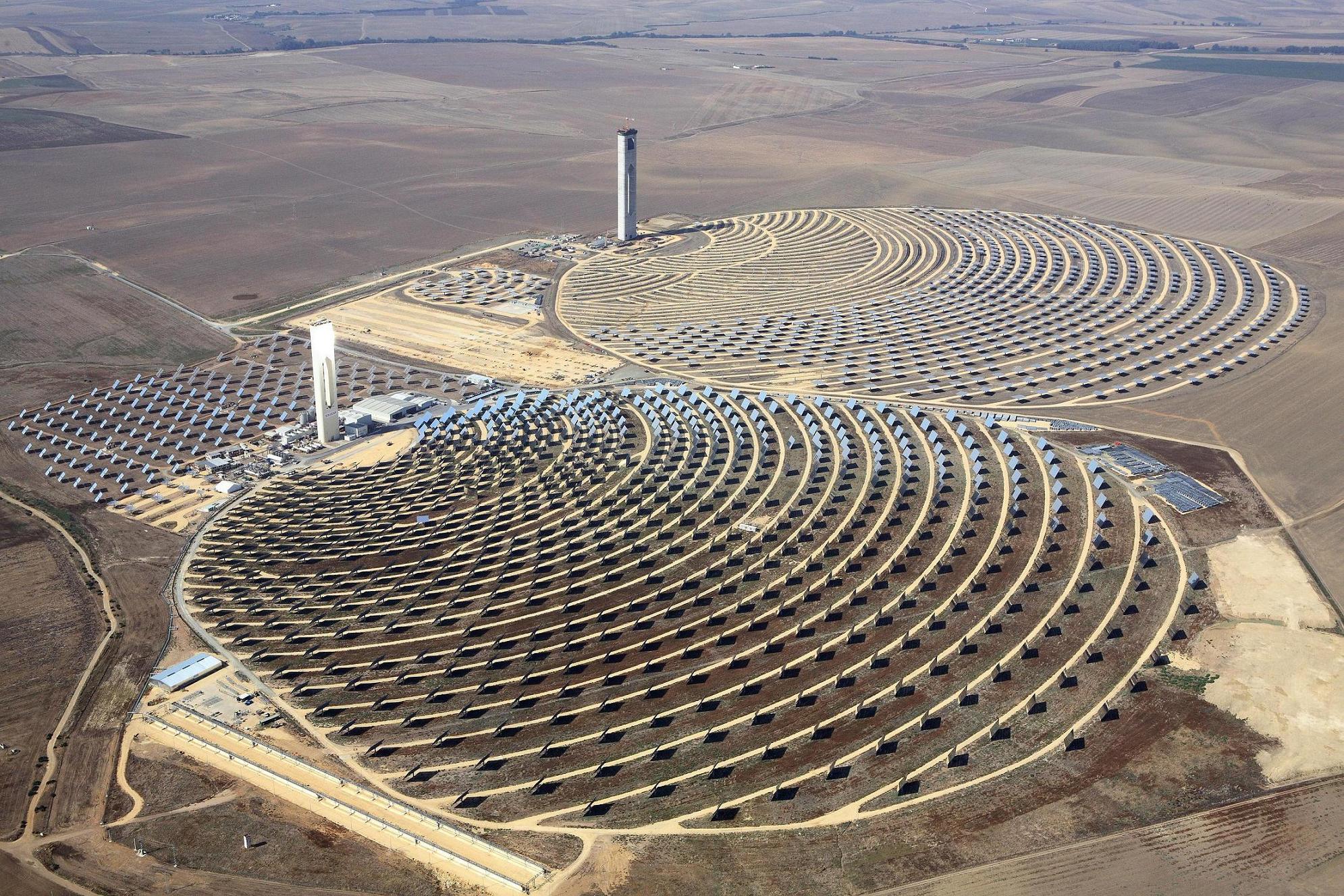
A very promising option is a literal migration to renewable energy resources. Utilization of renewable energy has potential to alleviate many of the problems that face Africans today, especially if done so in a sustainable manner. South Africa is a good example of a country that has embraced renewable energy on a somewhat larger proportion compared to other African countries. A number of solar power projects that fall under the South Africa Renewable Energy Independent Power Producer Procurement Program have been developed to meet the electricity needs especially to the rural places where it is a problem to connect them to the national grid.

Concentrated solar power in south Africa
Concentrated solar power in South Africa

Although this is a step in the direction, there is need for emphasis to be placed on promoting renewable energy at all levels in the rest of Africa. In Dr. Rajendra Pachauri’s words, ‘to stabilize the concentrations, we need to move away from business as usual’. African countries can in fact move away from the usual fuels and fully embrace the clean and renewable energy options. The major impeding factors are seen to be the financial and infrastructural constrains.

Tapping into the COP20

The COP 20 provides a forum to discuss how such mechanisms can be dealt with in the context of adaptation, finance and technology transfer. The ongoing negotiations by the Subsidiary body for implementation (SBI) need to also consider focusing on the how African states, being very vulnerable to climate change yet lacking the capacity, can be assisted in shifting to cleaner energy options in the coming years.

Dr. Rajendra Pachauri reinforces that the “Science is at your doorstep, what we need to do is to come up with equitable, ethical and implementable set of actions by which we can move along a smooth path of development that would ensure a stable climate in the future.”

Sunday, 30 November 2014

Is There The Will Or The Way in KENYA?

Kenya’s long-term development trajectory is in threat. A recent article published in a leading Kenya newspaper highlighted the warning given by Kenya’s Environment Cabinet Secretary, Prof. “Negative impacts of climate change could reverse Kenya’s progress towards the attainment of Millennium Development Goals and the economic blueprint Vision 2030”.

1_drought
Drought and water shortages are making life near impossible, and they are only predicted to get worse.
The vision 2030 is a national long-term development blue-print that aims to transform Kenya into a newly industrializing, middle-income country providing a high quality of life to all its citizens by 2030 in a clean and secure environment. The three pillars of this vision- Economic, Social and Political- and the priority sectors within the vision 2030 (Tourism, Agriculture, Wholesale and retail trade, Manufacturing, IT enabled services and Financial services) are all climate sensitive.
The climate change impacts are evident from increased climate related extreme events that are affecting sectors- prolonged droughts and frequent floods in various parts of the country; unpredictable weather patterns that have greatly affected the Agriculture sector and a mix of other hazards are a tell of just how things can get worse if no action is taken.
Prof Wakhungu also notes that Kenya loses over Sh4.5 billion annually due to climate change impacts on development and infrastructure. “Climate change is the most serious and complex challenge Kenya and other sub-Saharan African countries have.
The phenomenon and its resultant impacts could cost the national economy as much as $500 million a year, an equivalent of approximately 2.6 per cent of the country’s GDP”.
It can be argued that if the business remains as usual, the costs of climate change on Kenya and other African economies will continue to rise. These costs should not only be measured in terms of ‘properties destroyed’ but should look at the lives lost, the health related costs.
Such issues are quite relatable especially among African countries that are highly prone to climate change impacts. The cascading impacts brought forth by climate change on people, sectors and infrastructure can actually be dealt with if all stakeholders put their foot down and come up with decisions that would cause a great revolution.
The COP20 offers this platform.
How prepared is Kenya and the rest of Africa for the COP20?
Ms Fatuma Hussein during the PreCOP

Delegates from governments, civil societies, NGOs, UN bodies, the private sector and others, from over 190 countries are heading to the capital of Peru, Lima, for the 20th session of the Conference of Parties to the United Nations Convention on Climate Change, otherwise known as COP20 that is scheduled to start from 1-12 December.

Kenya is part of the African Group and the G77 & China, the latter being a group of developing countries with a range of diversities among them. During the pre-COP, organized by the Ministry of Environment, Water and Natural Resources in conjunction with the Kenya Climate Change Working Group (KCCWG), various issues were highlighted in relation to the COP20. According to Ms. Fatuma Hussein of the Climate Change Secretariat, “Kenya is committed to having an ambitious and effective global instrument agreed upon at the UNFCCC level. The government is doing its best by developing instruments but there is need to do much more in terms of building resilience and adaptation”.

On behalf of Kenya, she felt that adaptation should be part of a global effort and not left as a national issue because it is an obligation for all parties to collectively reduce emissions of greenhouse gases that would reduce the impacts of climate change. Adaptation should therefore be driven by country needs through National Adaptation Plans (NAPs). The institutional arrangements/mechanisms should therefore be adapted in the agreement.

As opposed to adaptation, mitigation already has clear systems and mechanisms in place under the UNFCCC. However mitigation ‘should be based on science and be consistent with 2OC goal. There should be specific commitment to support developing countries’ efforts”.
An important issue of concern for Kenya is the climate finance which needs to be adequate, stable and sustainable. The financial targets should be quantified to be consistent with the temperature goal.
According to Ms. Hussein, “The Green Climate Fund (GCF) needs to be anchored on the agreement and a clear reporting mechanism clarified. There will be need to look at how much the GCF amounts to and how much has been pledged so far”.

Luckily for Kenya, the funds have been approved but the challenge remains with the institutional and legal frameworks which are still being developed. The finalization of the climate change policy will aid in putting in place the frameworks necessary for implementing projects and programmes that are geared towards reducing the impacts of climate change.

It is hoped that the COP20 will set a good stage for a global and ambitious deal that would be a savior for all. As we head to the COP20, we can only hope, beyond all hopes, that the negotiations will be very fruitful. Indeed, success in Paris entirely depends on Lima!

Thursday, 28 August 2014

THE EBOLA OUTBREAK: A REMINDER TO INVEST IN FUNCTIONAL SYSTEMS


That the world has been awakened by the Ebola crisis in the West African countries- Guinea, Liberia, Nigeria and Sierra Leon-is not debatable. News channels in all regions of the world have extensively reported on the intensity of the crisis. The World Health Organization has termed this a ‘global public health emergency’ as the socio-economic systems in the affected countries are severely disrupted. Governments are keen to put measures in place to prevent spread of Ebola into their boarders. The World Bank recently pledged $ 200 million dollars to help contain the crisis. But isn’t this the case of too little too late?                                                                                                                                                                                                                                                          
The world needs to critically think beyond post crisis response. Most African countries are highly dependent on external resources for funding- In Liberia, for instance, the Ministry of Health and Sanitation received 8.2% of the total Government budget in 2011 which is way below the target of 15% of total government allocation as per the Abuja Declaration. Even with the looming crisis, these countries do not have enough medical practitioners to attend to the victims of Ebola.
The right to health is a human right. Article 12 of the International Covenant on Economic, Social and Cultural rights, clearly recognizes the right to "the enjoyment of the highest attainable standard of physical and mental health”. Article 12.2 requires parties to take specific steps to improve the health of their citizens, including, inter alia, preventing, controlling and treating epidemic diseases, and creating conditions to ensure equal and timely access to medical services for all. The right to health encompasses access to timely and appropriate health care.
Governments need to prioritize health care as a way of achieving sustainable development. There is need to allocate enough funds to the health sector, develop and improve the health infrastructure; sufficiently remunerate the health workers and quickly intervene in any situation that might be a threat to the health of citizens. The technical capacity of medical practitioners, health workers and data analysts need to be enhanced. By building their capacity, the transfer of cutting edge health-related knowledge and skills can be achieved. Citizens also need to be made aware on matters related to health as this has the potential to improve their literacy level. For instance, the World Bank’s rating of the countries’ literacy levels show that Guinea and Sierra Leon have some of the lowest literacy rates in the World at 41% and 35.1% respectively. A great deal of investment, therefore, needs to be directed towards empowering citizen through access to information in all its forms. Sensitization of citizens on issues relating to prevention and control of diseases, sanitation and regular medical check-ups, has the potential to minimize the outbreak and spread of diseases.
Apart from disease outbreaks, attention should also be given to climate-related disasters as they are closely linked. An effective EWS can potentially reduce the impact of natural disasters-floods, drought, landslides, El-Niño, wildfires-across populations. Africa, for instance, is one of the worst disaster-hit continent yet it has insufficient capacity to deal with these disasters. The 5th Assessment report of the Intergovernmental Panel on Climate Change (IPCC) clearly points out that the global surface temperature will continue to rise to 1.5oC by the end of the 21st Century. There is also anticipated increase in the rise of sea level, warming of the oceans, carbon-dioxide production and change in the global water cycle. All these scenarios point to an increase in climate related extreme events that would call for an effective EWS. Most of the existing systems, however, are not timely, more integrated and actionable. Vulnerable communities and sectors continue to be affected by disasters and more often, get information after the disasters have occurred. Governments have the responsibility to reduce the impact of climate change on its citizens by proactively working towards reducing the risk and addressing the root-causes of climate change.
The Kenya government has a well elaborated climate change action plan and a number of initiatives have been put in place to deal with climate change. Vulnerable communities in the interior and more often, inaccessible regions of the country continue to severely suffer from the impacts of climate change-drought, famine, floods, water scarcity, etc. More effort has to be directed towards reversing this trend.
Climate change related impacts and other disasters are here with us…We need to act now for the sake of our future and that of our generations. The ability to deal with all forms of disasters solely depends on functional systems. Could we do better?